

• Thursday, August 20, 2026

  • 7 to 9pm ET

  • Live on Zoom

  • Attorneys only

For attorneys, at every size of practice.

You already know the tool is in the building.

Someone at your firm is already pasting client facts into a chatbot. Maybe it's an associate saving an hour on a first draft, maybe it's you at 11pm. It's happening whether or not there's a policy for it, and the honest question stopped being whether to allow AI a while ago.

The harder question is which parts of the work it can actually be trusted with. Most attorneys who tried these tools ran into the same wall: nobody wants to spend an hour contextualizing a matter to get back something they wouldn't put their name on. That's not a failure of the models, it's what happens when a system is told to be generally helpful without being given the structure a legal answer requires.

So the choice in front of most attorneys isn't adopt or abstain. It's evaluate well or evaluate badly. This session is two hours on doing it well. You'll watch work you'd hand an associate for a day run in about four minutes with every finding cited to its source, then learn exactly how to check it, and how to read anyone's claims, including ours.

01

Structure beats scale.

Thoroughness comes from how the work is organized, not from the size of the model. The same commodity models that score zero on their own reach real accuracy once Olympus coordinates them. The gain sits in the architecture. We show you how that structure is built and why it holds up.

Live: we give Watson a plain-English question and let him drive the discovery platform. He knows the matter, so one phrase becomes a search across the words people would actually have used and the months it would have happened in, and he comes back with the documents and where they sit.

How to read any vendor's accuracy claim: all pass versus partial credit.

02

Verification, not trust.

Every finding carries its source document, the exact section, and a confidence level. When a partner asks how you know, you have an answer you can point to on the page. You are not asked to trust the output. You check it, one citation at a time, before it leaves your desk.

Live: we run an NDA against a playbook and get back the specific deviations, each one carrying its clause number, then click straight through to the passage on the page and check it in front of you.

The four questions to ask any legal AI vendor.

03

Run it three years forward.

A contract review tells you what a document says. The harder question is what it does to you later. Jeeves reads the agreement as written, then war games the friction points: you sign today, a better offer arrives next month, you want out, and here is the exact clause that decides how that goes. Then you fix the clause and run it again. It is also the sanity check you would normally send to an associate, the read-it-again-and-tell-me-I-did-not-miss-something pass, except it comes back in minutes.

Live: we take a real agreement, run it forward three years, surface the hinge moments where it breaks, then rewrite one clause and watch the outcome change.

The war-gaming pass to run on your next agreement before it's signed.

04

Reading is the bottleneck, not hours.

The real cost of review is reading, not billable hours. Sampling a fraction of the record is how most firms manage that cost today, and it leaves risk in the pages no one opened. Full depth review on every matter changes what you can promise a client. We work through where that line sits for you.

Live: Holmes takes an outcome and works the case backwards, reconstructing the chains that lead there, then names what strengthens ours and what weakens theirs. Marshalling facts forward is what every litigator already does. This is the direction nobody can do by hand.

The sampling versus reading frame for pricing your own risk.

What the numbers say.

Strict all pass means a task counts only if every required criterion passes. One miss fails the whole task. There is no partial credit. Absolute numbers are low on this metric by design, and frontier systems land in single digits.

The identical commodity models score 0% in a conventional agentic setup. Coordinated through Olympus, the same frozen weights reach 17.75%. The advantage is architecture, not model size.

Every finding carries its source document, its section and a confidence score. Strict all pass grading requires provenance, so nothing is asserted without a citation.

Measured on the full public legal agent benchmark under strict all pass grading, with source provenance required on every finding. We walk through the complete results live on the call, including where we do not lead.

Two hours, and what fills them.

7:00

What legal AI can and cannot do

Where it holds up, and where it still fails on legal work.

7:20

A full document review, start to finish

Work you would hand an associate for a day, in about four minutes.

7:50

The numbers, including where we do not lead

How the benchmark is scored and how to read anyone's claim.

8:20 to 9:00

The four vendor questions, and questions to the end

Bring a matter in mind and ask us to run something specific.

The full session flow is shared with registered attendees.

All times Eastern. Live on Zoom.

Works with your stack

It reads the platforms your firm already runs on. Everlaw and your e-discovery record, SharePoint, OneDrive, Google Drive, your mail, and the documents already sitting in the matter. Nobody has to move anything or learn a new place to put files.

What you leave with.

Four things you'll use the week after, whether or not you ever touch our software.

A contract, war gamed.

How to run an agreement forward through its own failure modes before you sign it, and the one clause that usually decides them.

What to hand over first.

The four tasks where firms get real value now, and the ones that should stay with a person.

The four vendor questions.

Four questions to put to any legal AI company, plus the answers that should reassure you and the ones that should end the meeting. You'll be able to run them on your next vendor call, and they work against us just as well.

Read any accuracy claim.

How to tell a strict all-pass number from a partial-credit one, which changes how you read every vendor's pitch.

What attorneys said afterward.

Last summer I had a multi-witness bench trial and I used ACTi as my only helper to prepare. I uploaded all of my documents and built a full blueprint in less than a day: my case outline, my direct and cross examination outlines, my opening statement. I could not have done it without it.
Laura S.Attorney
After more than 30 years practicing law, this changed how I serve my clients. When a client calls with a probate question, the kind of research that used to take me hours now comes together in minutes.
Vesper B.Attorney, 30+ years in practice
Having it in your pocket means that when an idea hits, you do not lose it. The next time you talk, it asks how it went and gets you back on track.
George G.Attorney

Practicing law in the AI era.

Free to attend, for attorneys. Bring one live matter and watch a full review run on it.

Free to attend. We send the joining link and one reminder, and nothing else.

Your Hosts

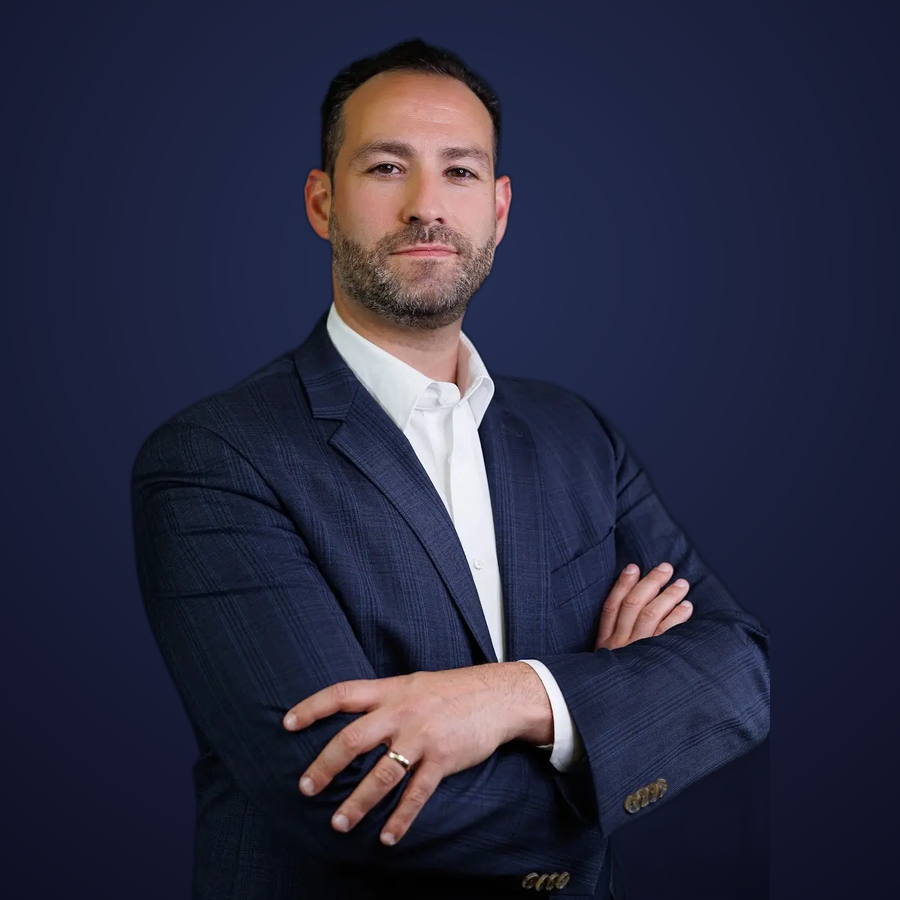
Sean Callagy, Founder, Callagy Law

Sean Callagy

Founder, Callagy Law

Sean has operated Callagy Law for 27 years and built it into a 125-person multistate firm running on a paired human-AI architecture in live production. He earned back-to-back Top 100 national jury verdicts from $0 offers, both closing in eight figures, and the firm has collected over $1B running this exact framework. ACTi, the agentic system behind the firm, is his own.
Michael Smikun, Partner, Callagy Law

Michael Smikun

Partner, Callagy Law

Michael is a partner in Callagy Law's healthcare, commercial and business litigation group, and he co-built both of the firm's Top 100 national jury verdicts, the largest in Arizona in 2016 and the fourth largest in New Jersey in 2014. He's argued and won in four federal circuits and before the New Jersey Supreme Court. On these nights he plays the skeptic, asking the question you're already thinking before you have to.

What we won't do.

We're not going to tell you the tools you already own are worthless. Copilot is useful for drafting and business development, and general research tools have their place. What we'll show you is the work that sits outside what a generalized system can do, and where the line between them actually falls.

We're not going to show you a recording and call it live. The re-run on something chosen in the room is the whole proof, which is also why the replay is a weaker version of the evening.

And we're not going to suggest anything here replaces the judgment that carries your name. It replaces the reading, not the deciding.

The questions attorneys actually ask.

I am skeptical of legal AI. Is this for me?

Particularly. Most of what you leave with is how to evaluate anyone's accuracy claim, including ours, and the difference between a vendor reporting partial credit and a vendor reporting strict all pass. That is useful whether or not you ever use this software.

Will there be a replay?

Everyone who registers gets the replay. The live portion is where you can ask for something specific to be run, so the room gets a version of the demonstration that the replay does not.

Is this accredited for CLE?

No. This is not an accredited CLE session, and we would rather say so plainly than have you find out afterward.

Who is running it?

Sean Callagy and Michael Smikun, live for the full two hours. Both are practicing trial attorneys, and between them they built two of America's Top 100 jury verdicts.

Whatever you decide about tools, the attorney on the other side of your next matter is either already working this way or about to be.

Thursday, August 20, 7 to 9pm ET. Live on Zoom, attorneys only, and free to attend.

Save my seat

Questions before the 20th? Call and ask Athena, she'll know why you're calling. +1 (201) 367-0836